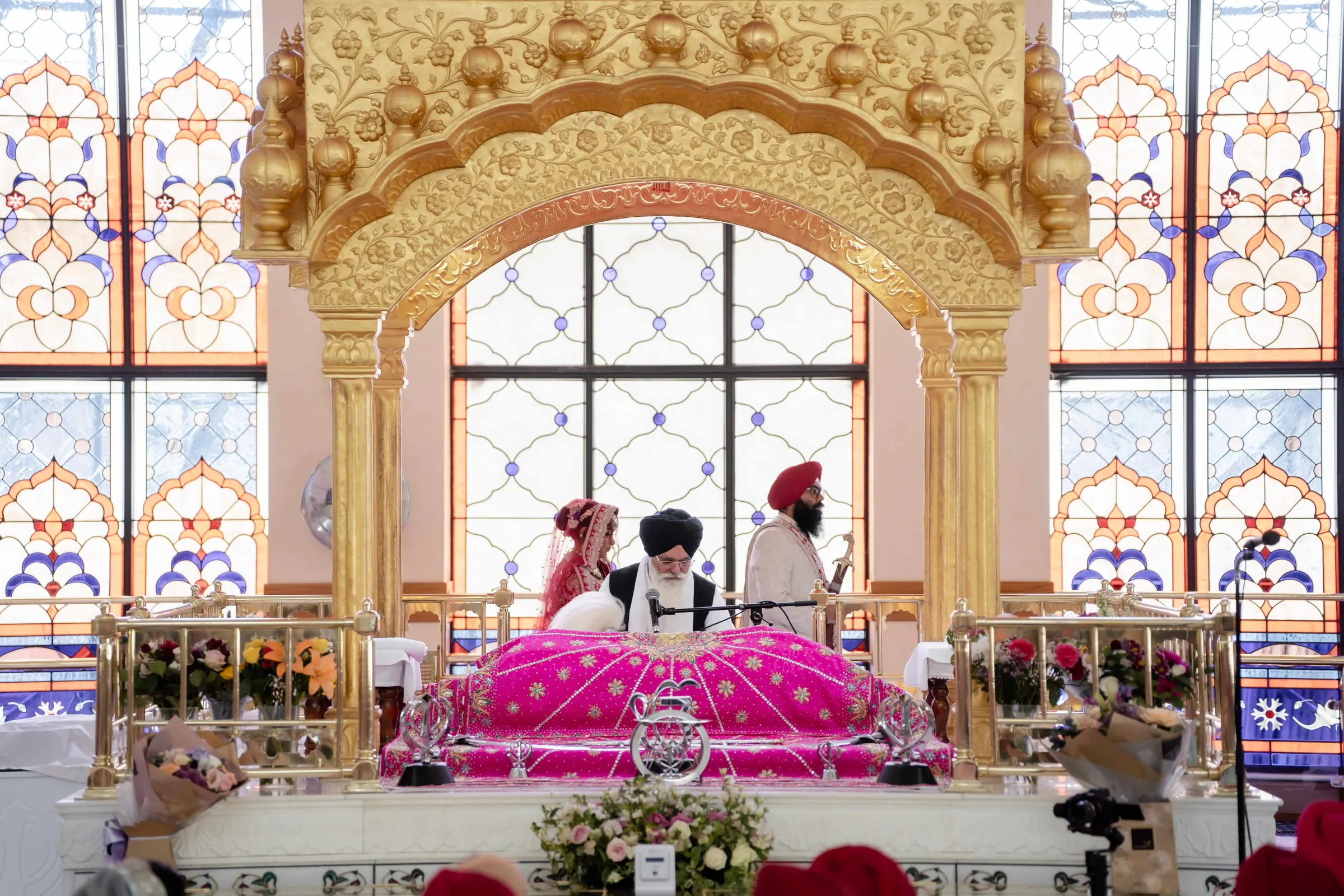
Planning a Sikh wedding in the UK is one of the most exciting journeys for couples looking to honour Sikh wedding traditions while celebrating in Britain you’ll embark on together. Whether you’re dreaming of a traditional Anand Karaj ceremony in a historic Gurdwara or a grand reception at a stunning British venue, there’s so much to consider. This guide covers everything you need to know about planning a Sikh wedding in the UK.
Deciding between one day and two? Read why we prefer holding the Sikh wedding reception the next day, with the practical benefits and costs to consider.
Understanding Sikh Wedding Traditions in the UK
Sikh weddings in the UK beautifully blend centuries-old Punjabi traditions with modern British practicality. The heart of every Sikh wedding is the Anand Karaj the sacred ceremony meaning “blissful union” that takes place in a Gurdwara. But there’s so much more to celebrate, with pre-wedding ceremonies, vibrant processions, and joyous receptions that can span several days.
The Spiritual Foundation: Anand Karaj
The Anand Karaj is a spiritual commitment made before the Guru Granth Sahib. The ceremony involves the Four Laavan sacred hymns composed by Guru Ram Das that the couple circles around the holy scripture, each round representing a stage of spiritual life together.
In the UK, the Anand Karaj must take place in a Gurdwara. Popular venues include Southall, Birmingham, Leicester, and Gravesend.
Pre-Wedding Ceremonies: Building Up to the Big Day
Sikh weddings in the UK typically unfold over several days, making Sikh wedding planning an exciting multi-day celebration, with each ceremony holding deep cultural significance.
Roka or Thaka: The Formal Agreement
The journey begins with the Roka or Thaka where families formally agree to the marriage. Traditionally, the bride’s father visits the groom’s home to express approval, applying a tilak and presenting gifts. This ceremony is usually small and informal, often not requiring printed invitations.
Kurmai: The Engagement Ceremony
The Kurmai is the formal engagement. The groom gives a ring; her family gifts a Kara and Kirpan. A red scarf is placed around the groom’s shoulders, and dried dates are exchanged as symbols of prosperity.
Chunni Ceremony: Welcoming the Bride
Before the wedding, the Chunni Chadana takes place. The groom’s mother covers the bride’s head with a blessed scarf. This emotional ceremony includes gifts and traditional songs.
Maiyan: The Cleansing Ritual
The Maiyan ceremony involves applying turmeric paste to the bride and groom. Female relatives sing traditional songs.
Mehndi Night: Celebration with Henna
The Mehndi ceremony has become a major pre-wedding event with henna, music, and dancing. Many UK families host Mehndi nights at function rooms with entertainment.
Jaggo: The Night Before Celebration
Jaggo is a night of music and dancing before the wedding. Traditionally, family members would carry a decorated pot on their heads while singing and dancing through the streets. Today, this translates to energetic pre-wedding parties with dhol drummers, vibrant outfits, and plenty of celebration.
The Wedding Day: Anand Karaj Ceremony
The wedding day begins early with rituals leading up to the Anand Karaj.
Morning Preparations: Sehra Bandi
At the groom’s house, Sehra Bandi takes place — relatives help with turban tying and the sehra (floral veil).
The Baraat: Groom’s Procession
The Baraat is the groom’s procession to the Gurdwara, traditionally on a decorated horse with dhol drummers. Some UK Gurdwaras have restrictions on horses and bands, so check with your chosen Gurdwara about their specific rules.
Milni: Meeting of the Families
Outside the Gurdwara, the Milni ceremony formally introduces both families. Elders from each side exchange garlands, embrace, and give shagun (monetary blessings). This ritual symbolises the union of two families.
Inside the Gurdwara: The Sacred Ceremony
Everyone enters barefoot with heads covered. The groom offers a rumala (decorative cloth). The bride’s father places a scarf (Palla) in the groom’s hand during the Palla ceremony, symbolising giving his daughter away.
The Granthi (priest) explains Sikh marriage duties before the couple begins the Four Laavan. As each hymn is sung, the couple circles the Guru Granth Sahib:
- First Laavan: Invokes divine awareness and moral living the couple commits to righteousness.
- Second Laavan: Emphasises ethical conduct and growing love between husband and wife.
- Third Laavan: Celebrates spiritual wisdom and detachment from worldly distractions.
- Fourth Laavan: Proclaims blissful union with the Divine — the couple’s love merges with God’s love.
After the fourth Laavan, the couple is pronounced husband and wife. The ceremony concludes with Ardas (prayers), a random verse reading (Hukamnama), and distribution of Karah Prasad a blessed sweet shared equally among all guests.
Langar: The Community Meal
Following the ceremony, everyone gathers in the langar hall for a free vegetarian meal embodying Sikh principles of equality.
Planning Your Sikh Wedding Reception in the UK
Most UK Sikh couples hold their Anand Karaj at a Gurdwara, followed by a reception at a separate venue.
Choosing Your Reception Venue
- Guest capacity: Sikh weddings typically host 250-600 guests
- Distance from Gurdwara: Travel time between venues
- Transport needs: Coaches for guests if venues are far apart
- Catering facilities: In-house or external Asian wedding caterers
- Dance floor and entertainment space: For Bhangra and celebrations
- Civil ceremony option: If you want legal registration at the reception
Popular reception venues include manor houses, hotels, and dedicated Asian wedding venues across London, Birmingham, Leicester, and Manchester.
Typical UK Reception Timeline
| Time | Event |
|---|---|
| 9:00 AM – 1:00 PM | Anand Karaj and langar at Gurdwara |
| 1:00 PM – 2:00 PM | Travel to reception venue |
| 2:00 PM – 3:30 PM | Couple portraits in venue gardens |
| 3:30 PM – 4:30 PM | Guest arrival and drinks reception |
| 4:30 PM – 6:00 PM | Bride and groom entrance, civil ceremony (optional) |
| 6:00 PM – 8:00 PM | Dinner service |
| 8:00 PM – 11:00 PM | Speeches, cake cutting, dancing |
Reception Catering
Sikh wedding receptions feature elaborate feasts:
- Starters: Samosas, pakoras, tandoori dishes
- Main courses: Paneer tikka masala, chana masala, lamb karahi, dal makhani
- Breads: Naan, roti, paratha
- Rice dishes: Biryani, pilau
- Desserts: Gulab jamun, rasmalai, jalebi
Many couples add modern touches like dessert tables and vegan options.
Sikh Wedding Budget Planning in the UK
UK Sikh weddings typically range from £50,000 to £100,000+, depending on guest numbers.
Typical Budget Breakdown
| Element | Estimated Cost |
|---|---|
| Venue hire | £5,000 – £20,000 |
| Catering (250-400 guests) | £15,000 – £35,000 |
| Photography & Videography | £3,000 – £8,000 |
| Decor & Florals | £5,000 – £15,000 |
| Music & Entertainment | £2,000 – £5,000 |
| Wedding attire | £3,000 – £10,000 |
| Invitations & Stationery | £500 – £2,000 |
| Transport | £1,000 – £3,000 |
| Miscellaneous | £2,000 – £5,000 |
Money-Saving Tips:
- Book early: Popular venues and caterers get reserved 12-18 months ahead
- Consider weekday events: Friday-Sunday weddings command premium pricing
- Package deals: Some venues offer discounts for multiple events
- Off-peak seasons: Winter weddings can be significantly cheaper
- Prioritise: Decide what matters most and allocate budget accordingly
Gurdwara Requirements and Legal Considerations
Religious Requirements The Anand Karaj can only be conducted for Sikhs. If one partner is not Sikh, they must:
- Accept the Sikh faith formally
- Adopt Singh or Kaur in their name
- Present relevant identity documents
- Understand basic Sikh tenets including the Mool Mantar
Most Gurdwaras meet with couples beforehand to discuss requirements.
Legal Registration The Anand Karaj is religious, not legal. You’ll need civil registration:
- Register office ceremony: Before or after the religious wedding
- Licensed venue ceremony: If your reception venue has a marriage licence
- Gurdwara registration: Some Gurdwaras are licensed for civil ceremonies
Many couples have a simple register office ceremony, then celebrate at their reception.
Wedding Attire and Dress Code
For the Bride Brides wear:
- Red or maroon lehenga: Symbolising prosperity and fertility
- Heavy embroidery: Gold or silver zari work
- Dupatta: Covering the head during religious ceremonies
- Jewellery: Matha patti (forehead ornament), nath (nose ring), chura (red bangles)
Modern brides may personalise colours, but modesty remains key for Gurdwara ceremonies.
For the Groom The groom typically wears:
- Sherwani or achkan: Embroidered kurta with fitted jacket
- Churidar or salwar: Fitted trousers
- Turban (pagri): Often coordinated with the bride’s outfit
- Kirpan: Ceremonial sword worn during the wedding
- Kalgi: Ornamental brooch on the turban
Guest Dress Code
| Event | Women | Men |
|---|---|---|
| Maiyaan | Yellow or pastel salwar kameez | Kurta pyjama |
| Jaggo | Colourful lehenga or saree | Bright kurta or suit |
| Anand Karaj | Modest suit or salwar kameez with headscarf | Suit or sherwani with head covering |
| Reception | Glamorous evening wear | Tuxedo or formal suit |
Important: Always bring a head covering for the Gurdwara. Avoid revealing clothing, and never wear black and white to religious ceremonies.
Post-Wedding Traditions
Doli: The Emotional Farewell The Doli marks the bride’s departure. She throws rice over her shoulder toward her mother, symbolising gratitude.
Pag Phere: First Visit Home Days after the wedding, the couple visits the bride’s family for Pag Phere, welcomed with gifts and a feast.
Reception Celebrations Many UK Sikh weddings now include multiple reception events:
- Walima: Lunch reception the day after the wedding
- Ladies’ Sangeet: Music and dance evening for female guests
- Post-wedding party: Extended celebration with friends
Tips for Non-Sikh Guests
If you’re attending a Sikh wedding as a non-Sikh guest:
- Arrive on time: Anand Karaj ceremonies often begin by 10:00 AM
- Cover your head: Essential for entering the Gurdwara
- Remove shoes: Before entering the prayer hall
- No alcohol: Strictly forbidden at Gurdwara events
- Separate seating: Men and women may sit on opposite sides during the ceremony
- Respect the scripture: Never turn your back on the Guru Granth Sahib
- Accept prasad: Blessed food offered at the end of the ceremony
Frequently Asked Questions
Final Thoughts: Creating Your Perfect Sikh Wedding
Planning a Sikh wedding in the UK is about honouring centuries of tradition while creating a celebration that reflects your unique love story. From the sacred moments of the Anand Karaj to the joyous celebrations at your reception, every element holds deep meaning.
Remember:
- Start planning early: Especially for popular venues and caterers
- Communicate with your Gurdwara: Understand their specific requirements
- Budget realistically: Factor in all events, not just the main ceremony
- Prioritise what matters: Focus your budget on elements most important to you
- Enjoy the journey: Wedding planning should be joyful, not stressful
Your Sikh wedding is more than a day it’s the beginning of a beautiful journey together, blessed by tradition, family, and faith. Waheguru bless your union.
Planning your Sikh wedding? Bookmark this guide and share it with your family to help everyone understand the beautiful traditions that make your celebration so special.